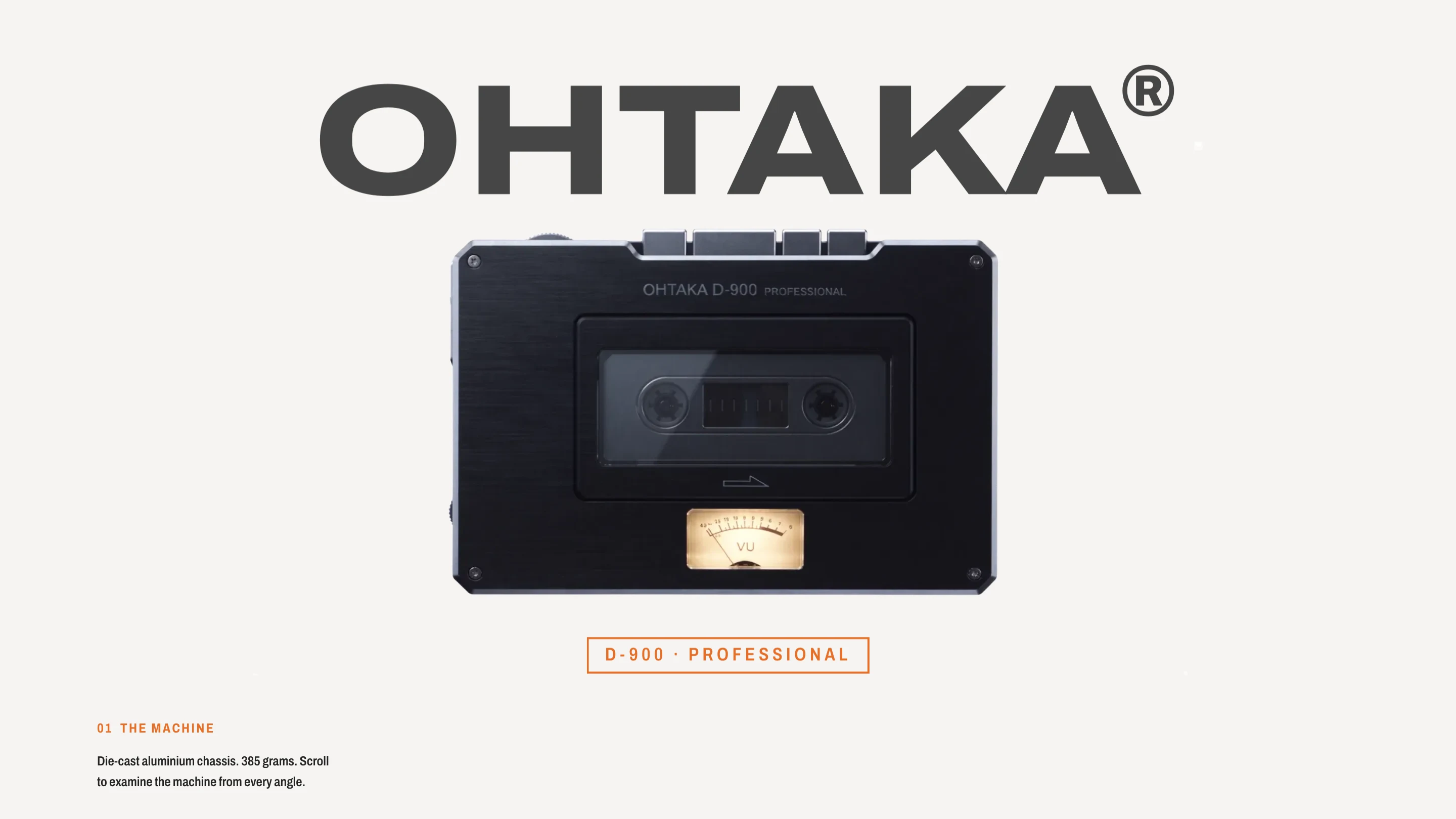
The real site, inside the frame: scroll it to explore.
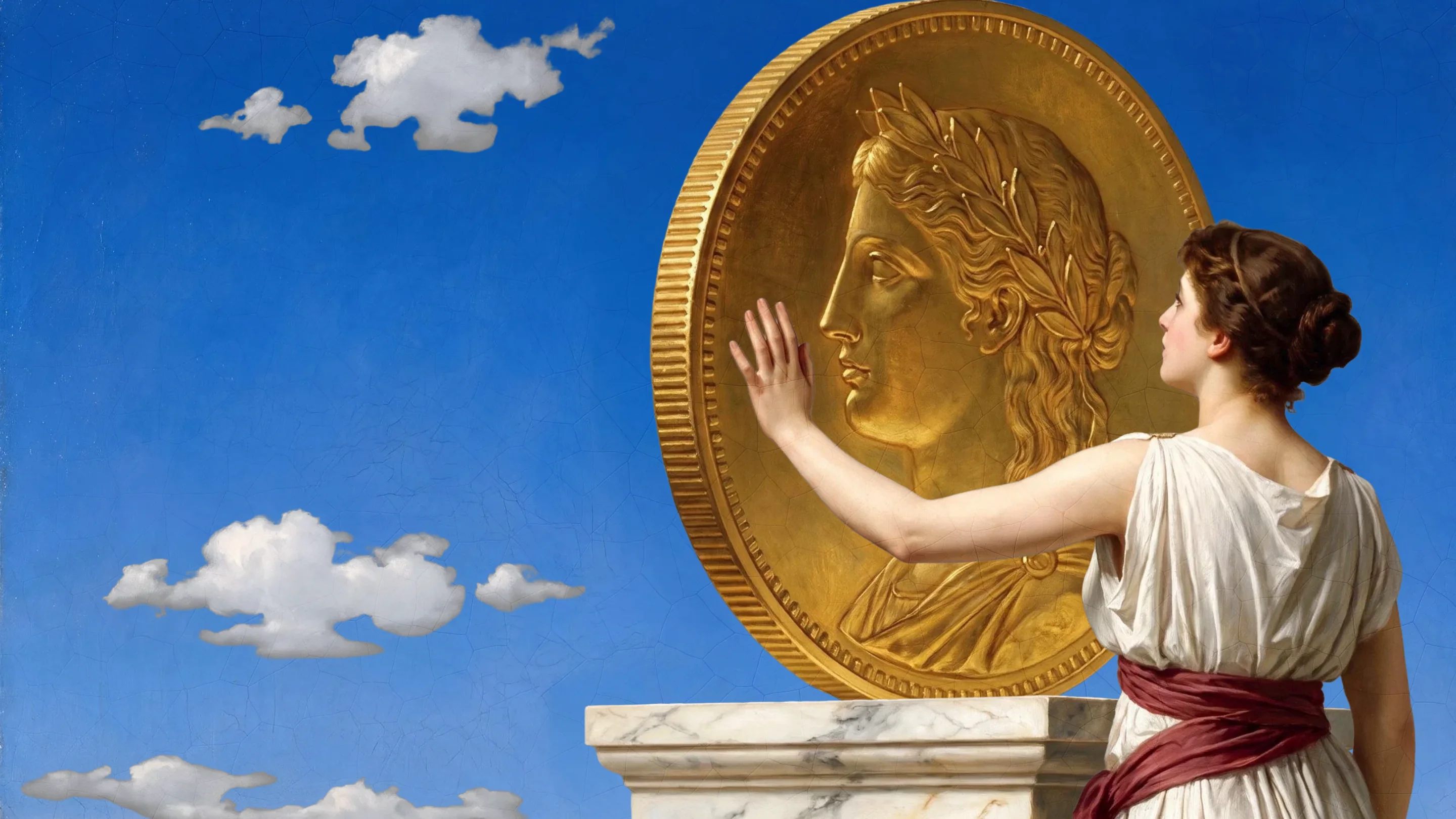
A single-page film, in English, driven entirely by scroll. Twelve screens, nine stations, from the first barter to a ledger nobody owns. Every station is a painting cut into separate planes that one shared camera moves through. Every passage from one station to the next is an effect held by hand: a burn, hairlines opening, or a film scrubbed frame by frame. And every word of every caption is threaded to the thing it names. Three minutes ten if you let the page read itself.
- 01
A pinned page, fifty-five screens of travel
One sticky screen and twelve paintings that follow one another on it: nothing enters or leaves the page's flow, everything is placed frame by frame by a shared camera, from the scroll position alone. On a desktop screen that is 44,700 px of travel for a page that never moves.
- 02
The damped scroll is hand-written, and the page can read itself
No library: a target, a current position, an exponential catch-up independent of the screen's refresh rate, and the page's real position kept in step behind it. Wheel, keyboard, scrollbar and finger all come in through the same door. Auto-play gives the nine stations 3 min 10, and the smallest gesture hands control back to the visitor.
- 03
Every painting is a stack of planes, never one image
Five to nine planes per station, measured once and for all in a positions file, each with its own depth coefficient: that is what decides how much a plane answers the camera and the cursor. Cursor parallax is proportional to the window's width and held to 35 % vertically, so nothing peels away.
- 04
The crackled varnish is baked into all 1,155 files
The craquelure network is computed in plate coordinates, not screen ones: at rest every plane's cracks join into one single cracked canvas, and when parallax separates the planes each one carries its own. Cell borders at two scales bent by noise, a dark hairline with a lighter lip, canvas weave and amber mottling. The bare layers are kept aside, and the varnished ones rebuild in one command.
- 05
Six shaders written for this site
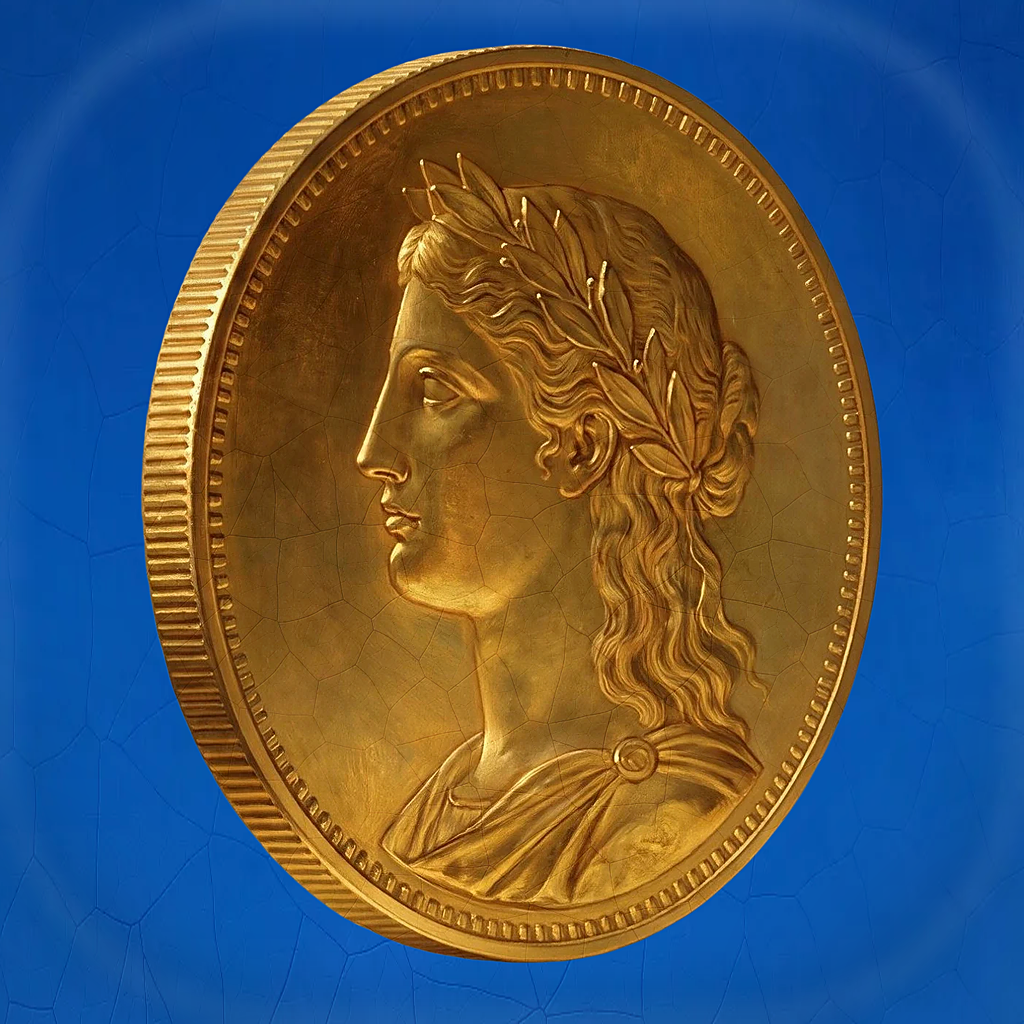
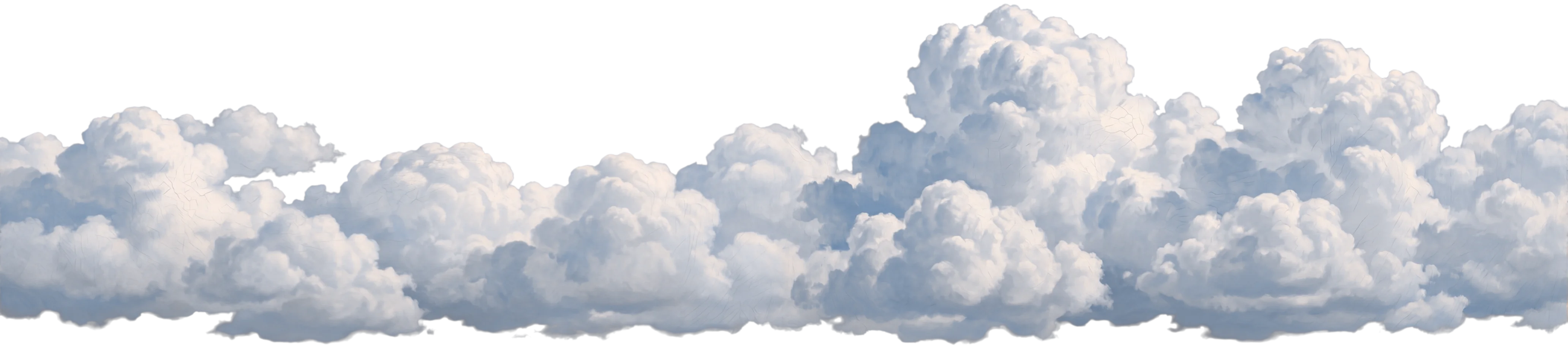
The dot screen on the clouds, the engraving of the coin, two fires, the smoke-out and the live craquelure are WebGL fragment shaders, drawn into a canvas in their plane's place, never image filters. Rendering is capped at 1.5 times the screen's density.
- 06
Three films scrubbed frame by frame
541 frames (240, 180 and 121), in two widths depending on the screen, requested six at a time starting from both ends then in dyadic steps: the shot is playable before it has fully arrived, in either direction. Each film's camera is measured frame by frame, so the captions and their threads ride the landscape instead of vanishing with it.
Is the preview on this page the real site?
Yes, it is the site itself, running inside the frame: you browse it in there, and step out of it to carry on reading this page. In the catalogue, the card shows its complete header, where the painting answers the cursor. For the grid, the site holds back its three films and its stations' planes: 800 KB instead of twenty-two megabytes, and the header is exactly the same one.
What language is the site in?
English, and it does not switch.
Where do the paintings come from?
From twelve images produced for this film, then cut into planes at the studio and measured one by one. The varnish, the cracks and the canvas weave are not in the original images: they are laid on top, and can always be rebuilt.
Does it read on a phone?
Yes. The damped scroll gives way to the system's own, the films switch to their 768 px variant, and the framing re-centres: on a wide screen the coin is pushed to two thirds so the title keeps the sky, on a tall screen it comes back to the middle. The system's reduced-motion setting removes the opening and the loops. The preview on this page only loads from a desktop screen.
Ohtaka